


10 proven growth strategies to increase production and profitability after buying a dental practice. Learn which growth tactics compound fastest.
You just closed on a practice. Now what?
Most new owners get this wrong. They think the work is done. But buying the practice is actually the easy part. Building it into something valuable is the real challenge. I've watched hundreds of dentists take over practices and watched what separates the ones who double production from the ones who spin their wheels.
The good news? Growth isn't random. It follows patterns. Small, consistent improvements compound into serious results.
Here are the 10 strategies that actually work.
1. Find the Diagnosis Backlog and Increase Case Acceptance
This is the easiest money you'll leave on the table if you don't do it.
Every practice has untreated conditions sitting in patient charts. Root canal therapy that's been recommended for two years. Periodontal disease that's never been addressed. Cosmetic cases patients want but never committed to. The diagnosis exists. The patient knows about it. You just need to close the gap.
Start by pulling reports on all patients with outstanding treatment plans. Then implement visual case presentation. Don't just talk about the problem. Show photos, use intraoral cameras, explain what happens if they don't treat it. Follow up with patients who initially said no. Most people make a buying decision on the second or third ask, not the first.
Most case acceptance happens on the second or third conversation, not the first. Following up is part of good patient care.
2. Add New Procedures
The easiest growth is selling things your existing patient base already wants but you don't currently offer.
Clear aligners are a common one that patients ask for regularly. Extractions are another. Adult sealants. Dental implants if you can refer them out initially. Even something as simple as adult fluoride opens up revenue if you're not already doing it.
Each new procedure doesn't need to be complex. It just needs to serve a patient need your practice currently ignores.
3. Optimize Google Maps and Manage Your Online Reputation
Your Google Maps listing and online reviews are where people decide whether to call your practice.
Claim your Google Business Profile if you haven't already. Add current photos of your operatories, waiting room, team. Respond to every review, positive and negative. Encourage happy patients to leave reviews. Negative reviews that you address professionally actually boost credibility.
This stuff is free and it works. Most practices neglect it completely.
4. Reactivate Your Lapsed Patients
Here's what surprises most new owners: reactivating a patient who's seen you before is cheaper and faster than acquiring a new one.
Pull your inactive patients. Anyone who hasn't been in for 12+ months. Send them a personal letter from you, not an automated email. Keep it short. "Hey, we haven't seen you in a while. We miss you. Come back and let's get you caught up." Offer a free exam or a discount if you need to.
The conversion rate is shockingly high because these patients already know and trust your practice. You're not building from zero.
5. Build a Patient Referral System
Your best patients know other people like them. That's how referrals work.
Make it easy for patients to refer. Ask directly. Provide referral cards. Create a simple incentive program. A toothbrush and a handwritten thank you note works better than you'd think.
But here's the key: your team has to ask. It doesn't happen by accident.
6. Improve Patient Communication
Missed appointments cost you production and money. Automated reminders cut no-shows significantly.
Text reminders the day before. Email confirmations. Use your practice management system to automate this stuff. It's not fancy but it works.
Beyond reminders, communicate clearly about costs before patients commit to treatment. Use your PMS to track which insurance plans require prior auth and handle it before the appointment. Small friction points add up.
7. Commit to Continuing Education
You bought this practice. You're now the leader. Your growth mindset sets the tone for the whole team.
Invest in courses that directly improve your clinical skills or expand what you can offer. Better clinical work means more complex cases and higher fees. It also means patients trust you more and accept treatment at higher rates.
Your team watches what you prioritize. If you're learning, they'll learn too.
8. Enhance the Patient Experience
Patient experience doesn't mean expensive renovations. It means details.
Is the waiting room clean? Do you start on time? Does your team greet patients warmly? Are treatment explanations clear? Do you return calls the same day?
These things cost almost nothing but dramatically impact case acceptance and patient loyalty. Patients will travel further and pay more if they feel valued.
9. Optimize Insurance Participation
Some practices are in networks that barely break even. Look at your payor mix and your reimbursement rates.
If you're in a low-reimbursement plan that brings in minimal volume, consider dropping it. Conversely, if you're out of network with payors that most patients use, you're turning away money.
This isn't something you should have to do constantly, but when you're optimizing, review it once a year.
10. Hire a Practice Coach
A good practice coach costs $3,000 to $4,000 a month, which is a significant expense on top of your loan payments. But they bring outside perspective and accountability. They see patterns across multiple practices and can identify issues you can't see from the inside.
Not every practice needs a coach, and you should evaluate whether the cost makes sense for your situation. But for practices with clear operational inefficiencies, a coach can pay for themselves.
The Philosophy
Here's what I've learned from watching hundreds of practices grow: small, consistent improvements compound into serious results. You don't need one home run. You need ten singles.
Each strategy doesn't dramatically transform your practice alone. But combined? They're the difference between a practice that's stuck and one that's thriving.
Start with the lowest hanging fruit. Reactivate lapsed patients and improve your online presence because those require minimal capital. Add new procedures because your patients are asking for them. Then layer in the rest as you scale.
Growth isn't mysterious. It's just the willingness to do the work nobody else is bothering to do.

Practice Evaluation & Advisory Service
Independent clinical and financial analysis to help you make an informed decision before you buy.
Learn more
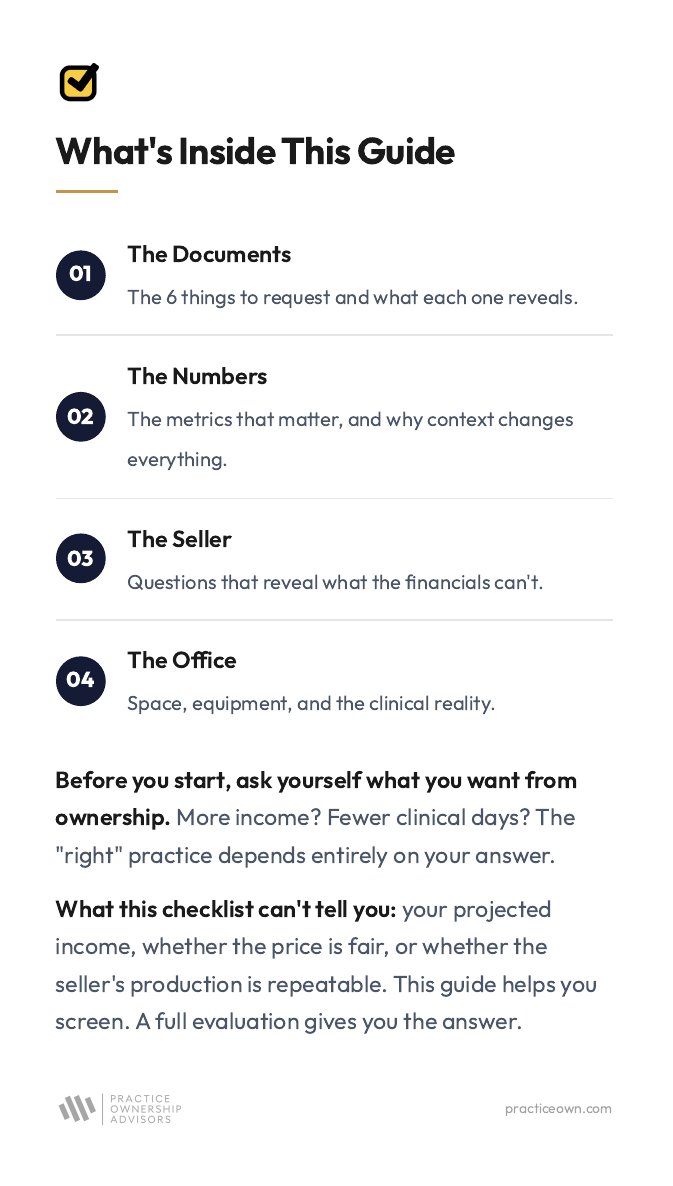

Newsletter + Free Practice Evaluation Checklist
One useful email per week on buying the right practice, plus an instant download of our free Practice Evaluation Checklist.
One email per week. Checklist delivered instantly. Unsubscribe anytime.