


The truth about dental practice brokers. Why they don't represent your interests, how their incentives work against you, and why you need independent evaluation before buying.
Let me be direct: your dental practice broker is not on your team. They're not your advocate. They represent the seller, and they're paid when the deal closes. The better they make that practice look, the more money they make.
I'm not saying brokers are evil. I'm saying their financial incentive is not aligned with your success as a buyer. And there's a lot they're not telling you.
Brokers Get Paid on Commission Tied to the Sale Price
This is where everything goes sideways. A dental practice broker typically makes 8-12% of the sale price. Many practices sell for $1.5 to $2 million or more. On a $2,000,000 sale, that's $200,000 in commission. Think about that: more than a lot of people make in an entire year, earned on a single sale.
You see where this is going. Every $50,000 increase in price equals an extra $5,000 in their pocket.
Now, they're the ones presenting the practice to you. They're the ones pulling the documents. They're the ones explaining the financials. Is it in their interest to show you the concerning documents first? To point out the weak spots? To suggest the valuation is high?
No. It's in their interest to get you excited about the practice and justify a higher price.
This doesn't mean they're lying to you. But it means they're selectively framing information. It means they're emphasizing the positives and downplaying the negatives. It means when you ask about something concerning, they have a ready explanation for why it's not actually a problem.
Dental Practice Valuations Are Completely Arbitrary
Here's something that infuriates me about the dental practice industry. In real estate, we have comps. I can look at three other houses sold on your street last year and tell you what your house should sell for. Data is public.
In dental practices, there's no standardized valuation. None. Brokers use rules of thumb like "75% of revenue" or "80% of collections" but these vary wildly. They're not based on market data. They're not published. They change based on what's convenient for the sale they're trying to close.
I've seen the same practice valued at $700,000 by one broker and $950,000 by another. Which one was right? Neither. Both were designed to justify a price that made the seller happy and got the deal done.
If you rely solely on broker valuation, you're flying blind. You need an independent perspective.
Broker "Market Analysis" Is Designed to Justify the Price
When a broker presents you with their market analysis, they're not being objective. They're justifying why this practice should sell for what the seller wants to get for it.
I've seen brokers pull comparables in ways that are technically accurate but deliberately misleading. They'll include high-end practices to make an average practice look better. They'll exclude declining practices that are otherwise similar. They'll adjust for things in ways that conveniently support the seller's price.
It's not illegal. It's not even unethical according to broker standards. It's just... crafted to tell a specific story.
When you see a market analysis from a broker, ask yourself: is this analysis designed to help me understand the market, or is it designed to justify this price?
Optimistic Assumptions Hide Real Problems
Watch how a broker projects future performance. They'll look at a practice that's been relatively flat for two years and suddenly project 8-10% annual growth. Why? Because if you assume strong growth, the current price looks more reasonable.
But where does that growth come from? If the dentist was slow, why will you be faster? If the team is aging, how will you replace them? If the location is declining, why will patients suddenly want to be treated there more?
The optimistic assumptions in broker projections are rarely based on realistic analysis. They're based on what assumption makes the deal work.
I've had buyers who relied on these projections to justify an inflated purchase price. Two years later, they realized the practice wasn't going to grow like the broker said it would. They overpaid based on fictional future performance.
Many Brokers Won't Recommend Independent Analysis
Now, this doesn't apply across the board. I've worked with a lot of very honest brokers over the years. The good ones actually encourage you to get your own representation, because they understand they're working for the seller and they want the buyer to feel confident in the deal too.
But many brokers won't recommend that you get an independent evaluation. They might not say it explicitly, but they'll downplay its value. Why? Because an independent evaluator might tell you the practice is overpriced. Might point out problems the broker glossed over. Might recommend a lower offer. That costs the broker money.
If your broker is actively discouraging you from hiring your own advisor, you need to seriously question what advice that broker is giving you. A broker confident in their analysis wouldn't fear a second opinion. That resistance alone should be a major red flag.
How the Broker System Actually Works
This doesn't mean you shouldn't use brokers. Brokers serve a legitimate purpose in the market, and many of the best practices you'll find are listed through them. But you need to understand how the system works so you can navigate it effectively.
When you buy a house, the real estate commission is typically split between the buyer's agent and the seller's agent. Both sides have representation, and both agents have access to the same MLS listings. The system is designed so your agent can show you every home on the market, regardless of who listed it.
There is no such thing in dental practice sales. There are no commission splits between buyer and seller agents. There is no shared listing database. A broker who has a practice listed for sale has no incentive to tell you about a better-fit practice listed by a competing broker. They only get paid if you buy the one they're selling.
This means you cannot rely on a single broker to show you everything that's available. You need to be reaching out to every broker in your area to make sure you're seeing all the practices on the market. If you're only talking to one broker, you're only seeing a fraction of what's out there.
And you need someone on your side who independently reviews the evaluations, the financials, and the terms, so your interests are actually being represented in the process. The broker is doing their job for the seller. You need someone doing their job for you.
Never Use the Broker's Recommended Attorney
This is critical. Some brokers have relationships with specific attorneys who also facilitate practice sales. Those attorneys make money on the deal closing. They don't have the same incentive to protect you that your own independent attorney would.
You need your own attorney. Someone with no relationship to the broker or the seller. Someone who works for you exclusively and gets paid by you regardless of whether the deal closes.
The same goes for accountants and other advisors. Don't use the broker's recommendations. Find your own.
What Brokers Don't Tell You About the Team
Brokers will describe staff as "experienced and stable" even if there's a 40% turnover rate. They'll say the office manager is "key to the practice" without mentioning she's been sending out feelers for other jobs.
They'll show you staffing numbers that look good without explaining that three people left last year. They'll tell you the team is "committed" while the practice has an opening they've been trying to fill for six months.
The team is critical. But brokers minimize team risk because team problems don't affect the sale price directly. What affects the price is the narrative they're selling.
Why I Do What I Do
This is why I exist as a buyer-side advisor. Brokers represent sellers. They're going to frame everything in the seller's interest. It's not malicious. It's just how the system works.
You need someone in the room whose only interest is protecting you. Someone who benefits when you make a smart purchase, not when the price gets as high as possible.
I tell dentists all the time: get a broker's perspective, but don't make a decision based solely on it. Get an independent analysis. Talk to the team separately. Pull your own documents. Ask hard questions about things that don't add up.
And if a broker gets defensive when you ask questions, that's a sign. A professional broker should welcome your due diligence. They should want you to feel confident in the decision.
The Bottom Line
Your broker is not your enemy. But they're not your friend either. They're paid to sell you a practice at as high a price as possible.
Before you sign anything, talk to someone who only works for you. Someone with no financial interest in the purchase price. Someone who can tell you honestly whether this practice is worth what they're asking and what you should really be paying.
That's the only way you'll know what your broker isn't telling you.
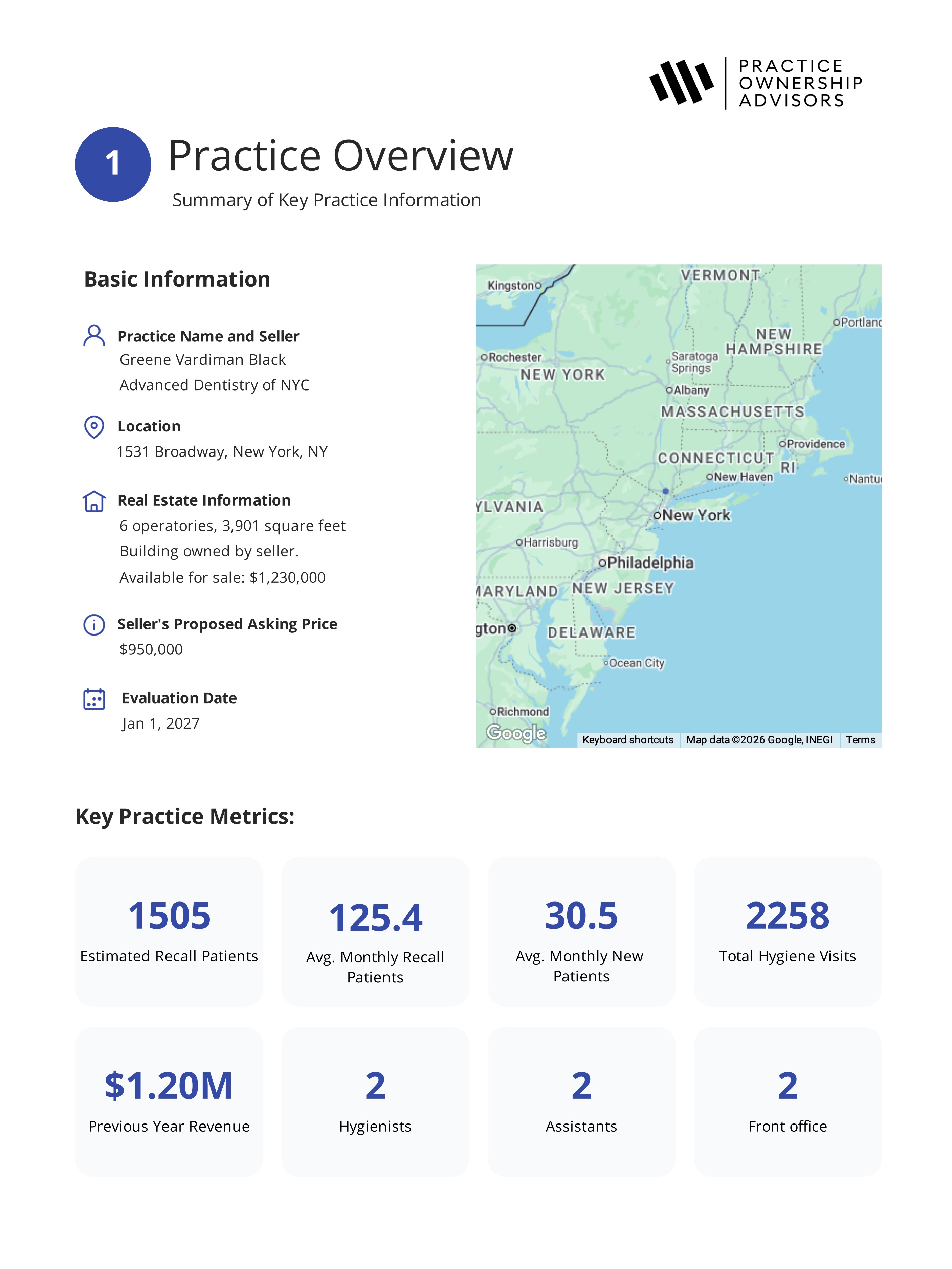
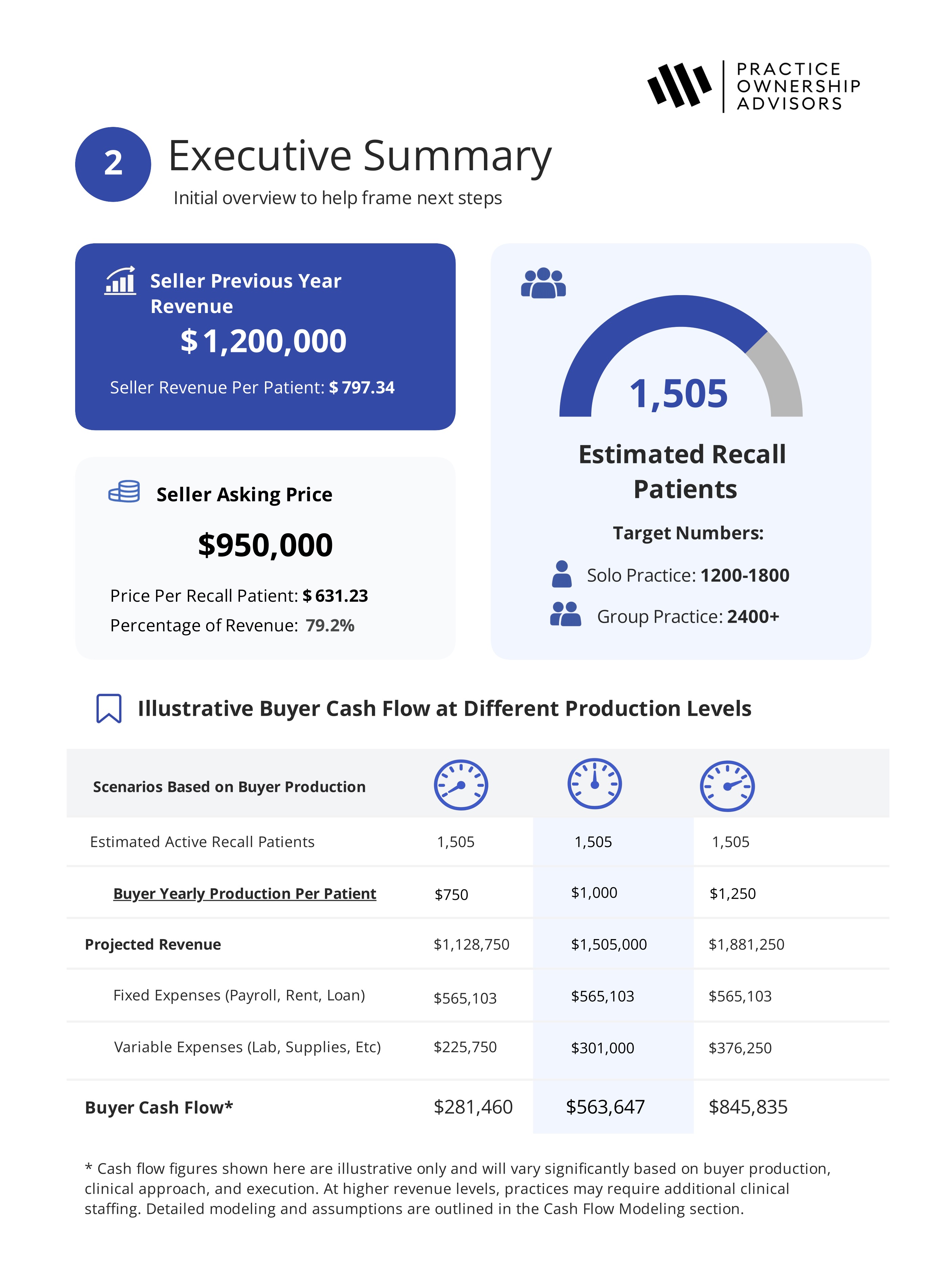
Practice Evaluation & Advisory Service
Independent clinical and financial analysis to help you make an informed decision before you buy.
Learn more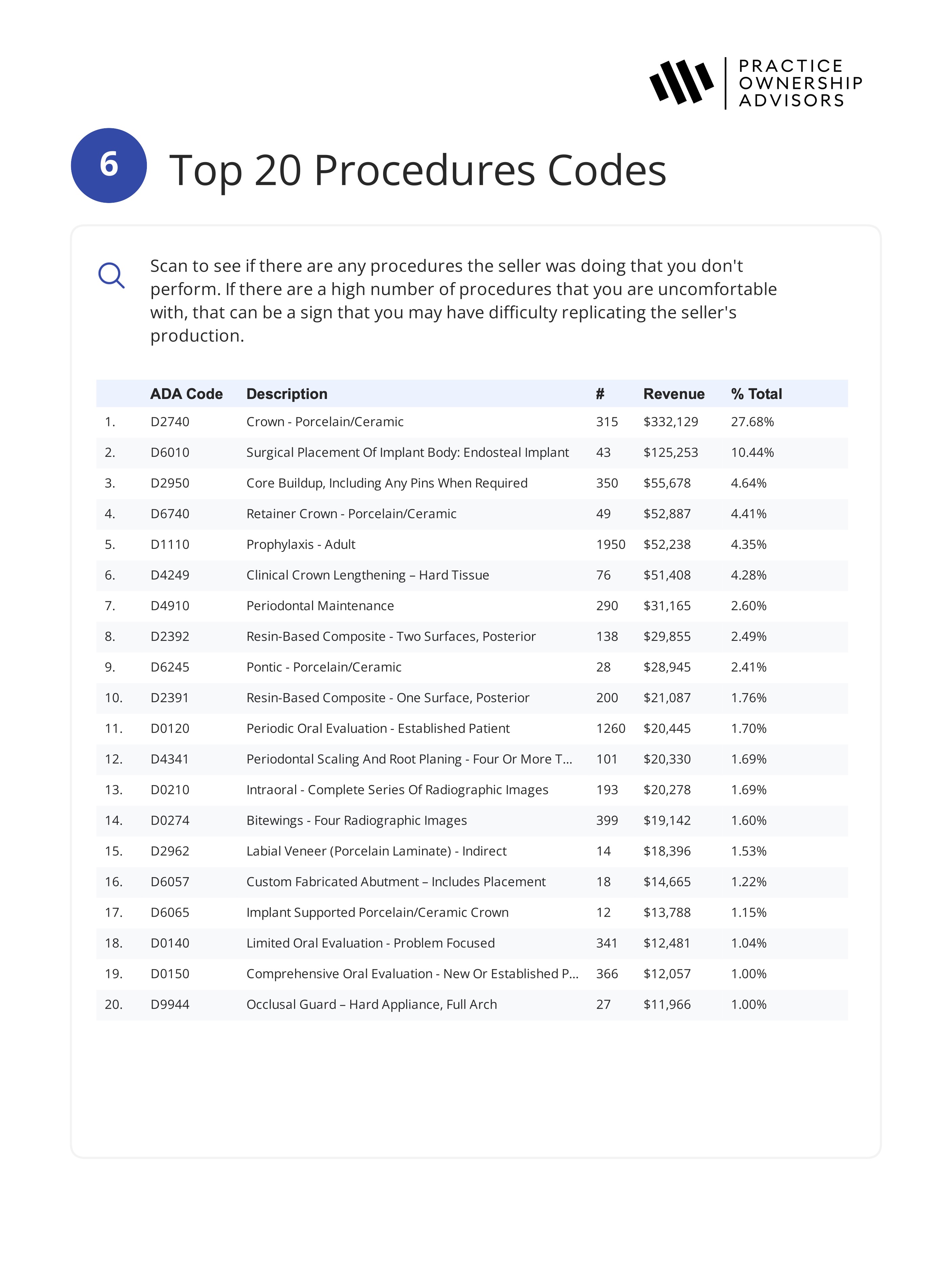
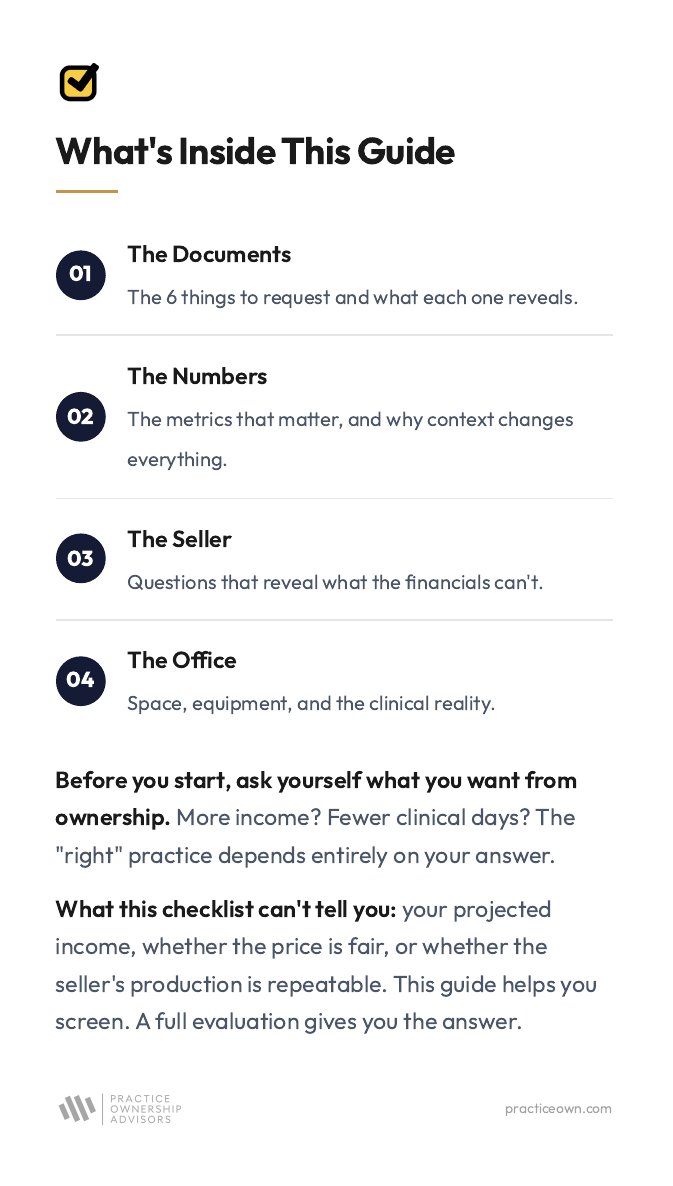
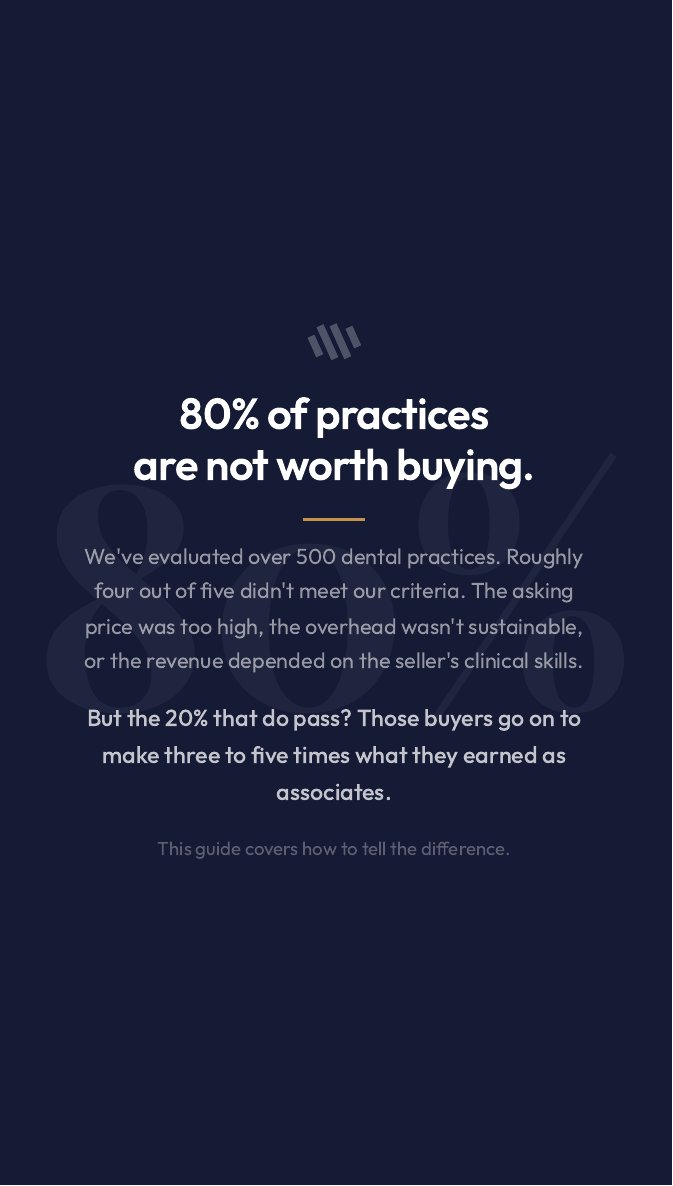
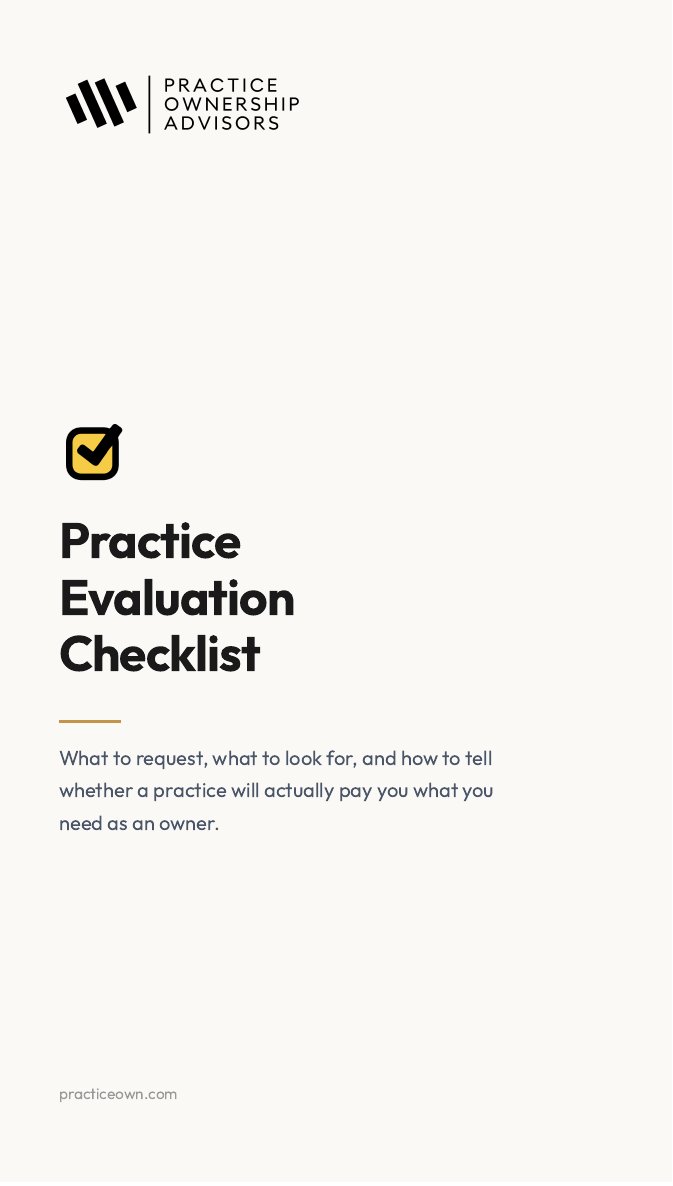
Newsletter + Free Practice Evaluation Checklist
One useful email per week on buying the right practice, plus an instant download of our free Practice Evaluation Checklist.
One email per week. Checklist delivered instantly. Unsubscribe anytime.