


Dental practices are among the safest loans banks make. You can often finance more than 100% of purchase price with little or no down payment. Learn about pre-qualification, interest rates, emergency funds, and lender incentives.
A lot of dentists assume they need a huge down payment to buy a practice. Like 20-30%. That's not how dental practice loans work. Dental practices are actually among the safest lending categories for banks. The lending landscape is better than most people think.
Let me walk you through how this actually works.
Dental Practices Are Safe Loans
From a bank's perspective, a dental practice is a solid investment. Dentistry is an essential service. People don't stop getting their teeth fixed when times are rough. Patient bases are sticky. Cash flow is relatively predictable.
Because of this, banks are willing to finance dental practices generously. We're talking much more generously than they finance most other small businesses.
The standard is that banks will finance 80-100% of the purchase price. But I've also seen banks finance more than 100%. How? They include working capital in the loan. You're not just borrowing money to buy the practice. You're borrowing money to buy the practice plus cover operating expenses, payroll, and other costs for the first few months while you stabilize things.
My Personal Loan
Here's a real example: my own acquisition. I bought a $350K practice and got a $450K loan. That's 110-115% financing. The loan covered the purchase price plus working capital to operate while I was learning the business and stabilizing patient flow.
Banks still finance practices this way.
No Down Payment Is Possible
Many banks will finance dental practice acquisitions with zero down payment. This is standard in dental lending, not an exception. Some banks may want you to have something in the deal depending on your situation, but zero down is absolutely possible and common.
Why do banks sometimes do zero down? Because the practice is solid enough that they don't need your money to make the risk acceptable. They're comfortable with the practice being the collateral.
If you can qualify, this is attractive because it preserves your capital for emergencies and unexpected issues that come up after closing.
Pre-Qualify With Multiple Banks
This is critical: pre-qualify with three to four banks minimum. Not just one. Different banks have different lending criteria. One bank might want you to have more experience. Another might want a larger down payment. A third might be more flexible. You want options.
Pre-qualification is free and it doesn't lock you in. It just tells you what you can get before you even find a practice.
Recommended Banks
The banks I typically recommend dentists work with include Provide, US Bank, Bank of America, and Huntington. These banks have established dental lending programs. Their loan officers understand dental practices. They know what normal looks like and what's a red flag in the numbers.
There are other banks that lend to dentists, but you want ones with experience in the space. That experience makes the process smoother and the terms better.
Interest Rates and Terms
Dental practice loans carry competitive interest rates that vary with the market and your credit profile. These are generally favorable compared to other small business loans because dental practices have such low default rates. Standard term is 10 years. Some banks will go longer, some shorter, but 10 years is typical.
The 10-year amortization makes sense because that's roughly the working lifespan of dental equipment and the systems in the practice. If you're rebuilding the practice over 10 years, your loan is backing that timeline.
The Emergency Fund
Here's something people underestimate: after you close on the practice, you need an emergency fund. Not the working capital that's part of the loan. Separate money set aside for when things go wrong.
That emergency fund should be $50K to $100K depending on the practice size. Why? Because unexpected stuff happens. An expensive piece of equipment breaks. A key staff member leaves unexpectedly and you need to hire and train someone new. A major patient leaves and it takes time to replace that income. Insurance doesn't cover something. Patient mix changes and collections dip.
If you don't have cash reserves, a minor problem becomes a financial crisis. You end up pulling from your personal savings or worse, putting things on credit cards. Keep that emergency fund separate and untouched.
Watch Out for Lender Incentives
Here's something to understand about lenders: they make money on commission. They close loans. The more loans they close, the better they do.
This creates a perverse incentive. A loan officer who's being paid on commission is incentivized to close the deal, not necessarily to make sure you're buying the right practice. They're not evaluating whether a practice is a good acquisition. They're looking at whether they can finance it.
You might be looking at a practice with some red flags and thinking, should I do this? The loan officer will tell you yes, we can finance it. Because they want to close the loan.
This is why having an independent advisor is crucial. Your advisor isn't making a commission on whether you buy. They're evaluating whether you should buy. Use that. If your advisor says no and your lender says yes, listen to your advisor.
What the Loan Covers
The loan covers the practice purchase price, equipment, goodwill, and working capital. It doesn't cover personal real estate (the building), personal vehicles, or personal guarantees beyond standard debt obligations.
If the practice owns the building, the building can be financed separately as real estate, often at lower interest rates because real estate is tangible and can be appraised.
Seller Financing as a Backup
Sometimes a practice can't be financed through a bank, or the bank terms aren't favorable. In these cases, seller financing is an option. The seller carries a note for part of the purchase. Usually, this is 10-20% of the purchase price with the rest coming from a bank loan.
Seller financing is harder to negotiate than it used to be because most sellers want cash and a clean exit. But in some situations, especially with weaker practices that banks are reluctant to finance, seller financing becomes necessary.
If you go this route, make sure the terms are clear: interest rate, payment schedule, what happens if you default, whether there's a due-on-sale clause if you sell the practice. Get it documented by your attorney.
The Timeline
From pre-qualification to getting the money in your account is typically 30-45 days after you've got a purchase agreement signed and basic financials submitted. That's pretty fast. But it depends on the lender and how organized your paperwork is.
Have your CPA and your attorney lined up before you need the loan. Getting loan documents reviewed by your attorney is part of the closing process, and you want that to go smoothly.
The Bottom Line
Dental practice loans are accessible. You don't need massive down payments. You don't need to wait five years to save up. You can use leverage to buy a practice sooner than you probably think.
The key is pre-qualifying with the right banks, understanding the terms, making sure the practice is actually worth buying, and keeping an emergency fund separate so you're not stretched thin after closing.
This is financing that works. Use it strategically and it accelerates your path to practice ownership significantly.
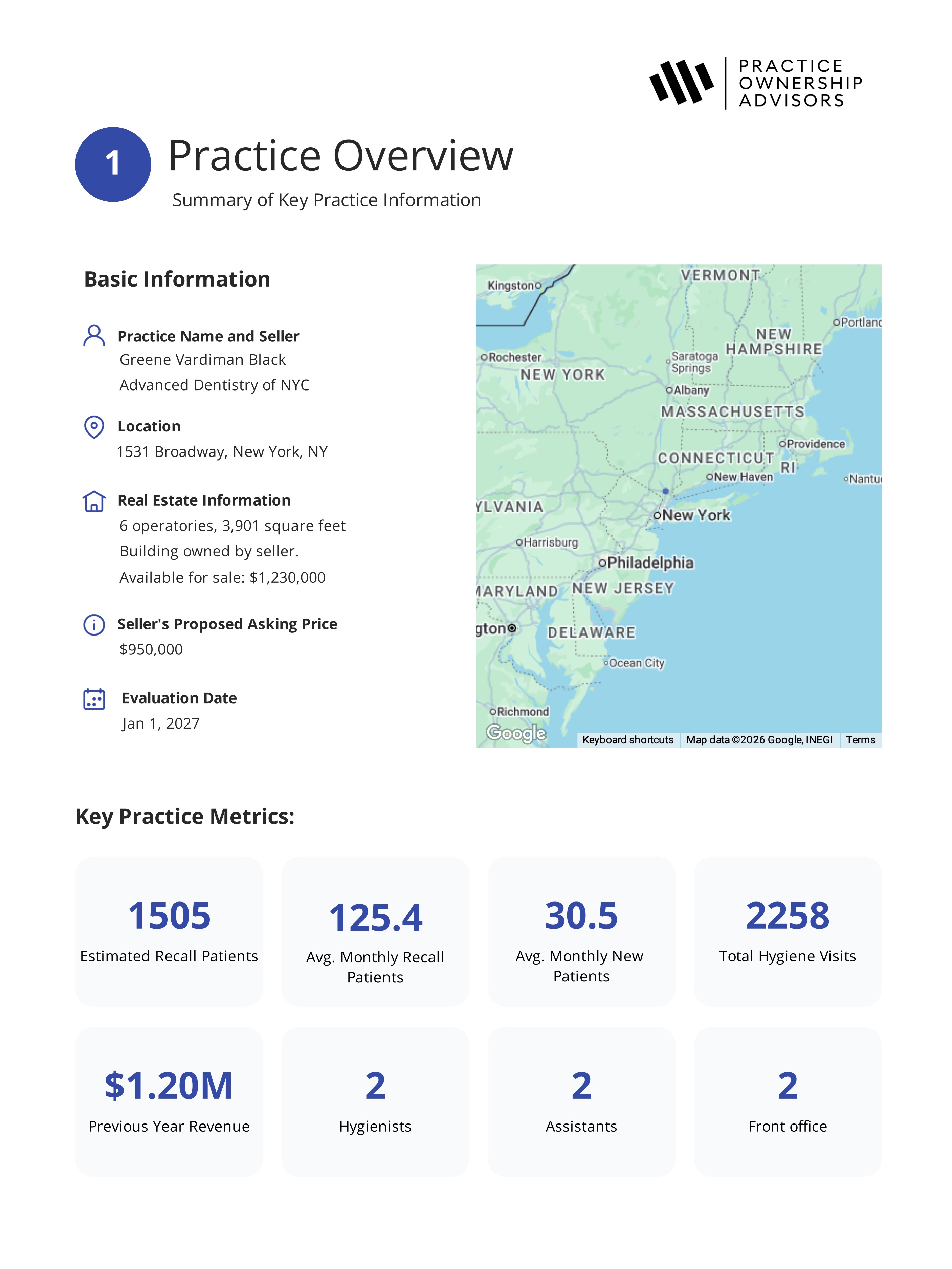
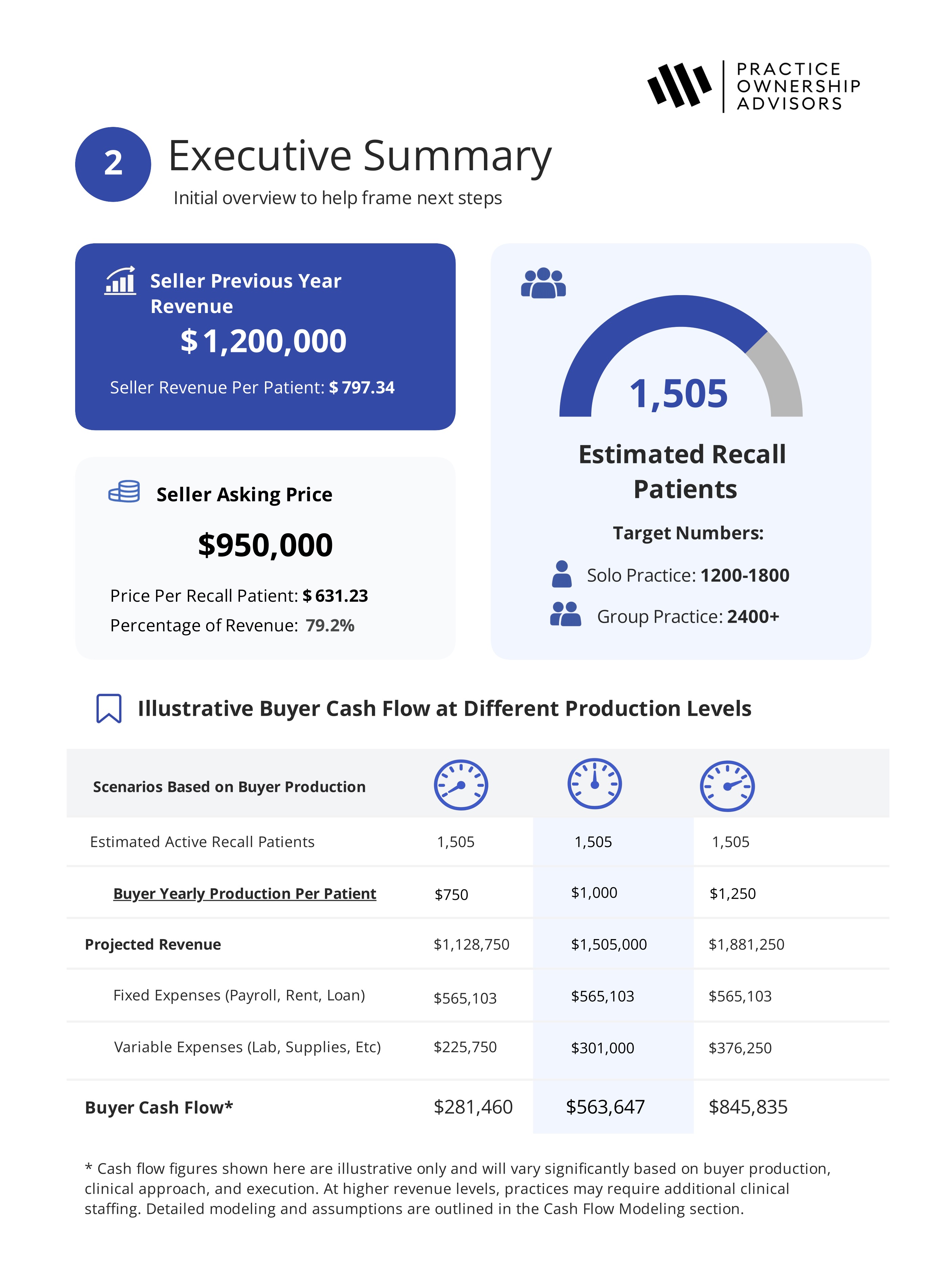
Practice Evaluation & Advisory Service
Independent clinical and financial analysis to help you make an informed decision before you buy.
Learn more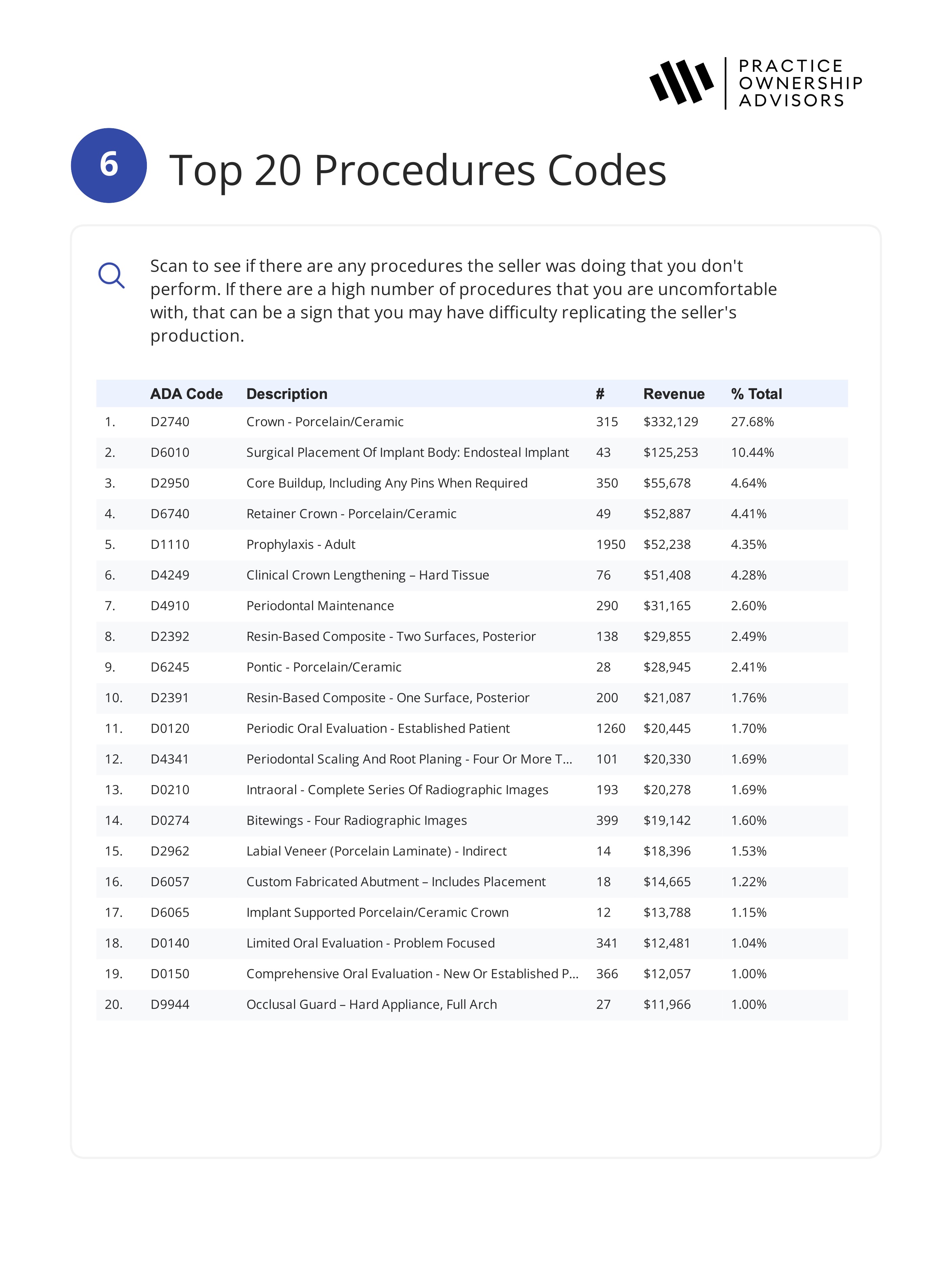
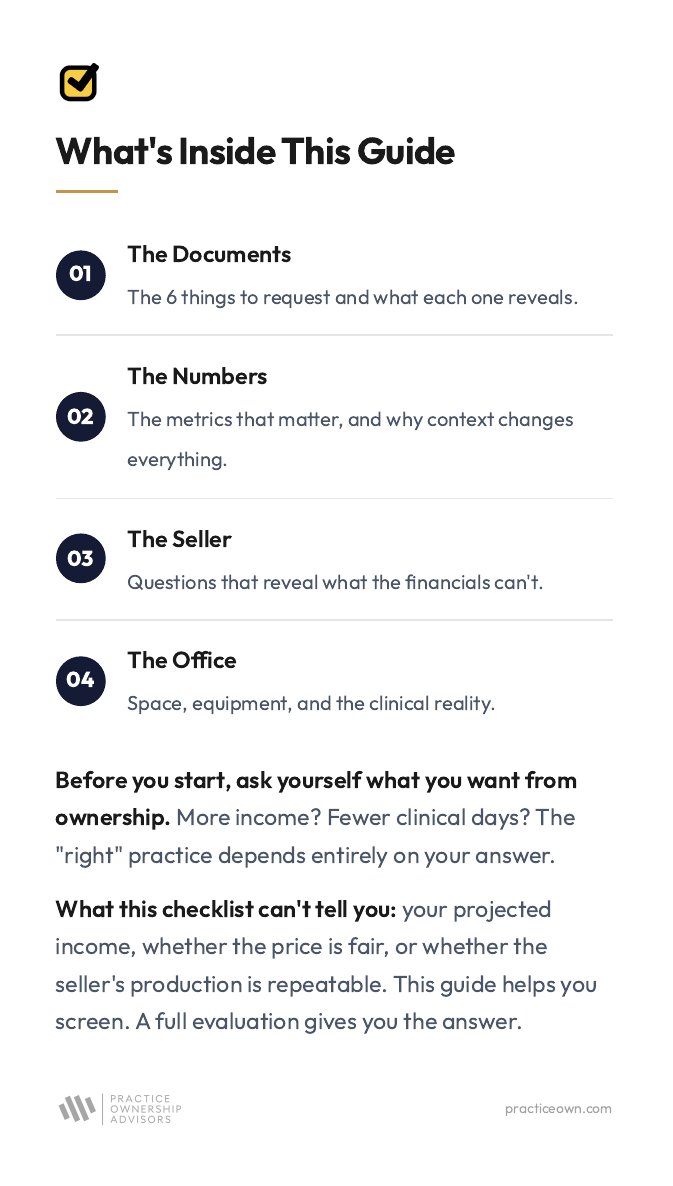
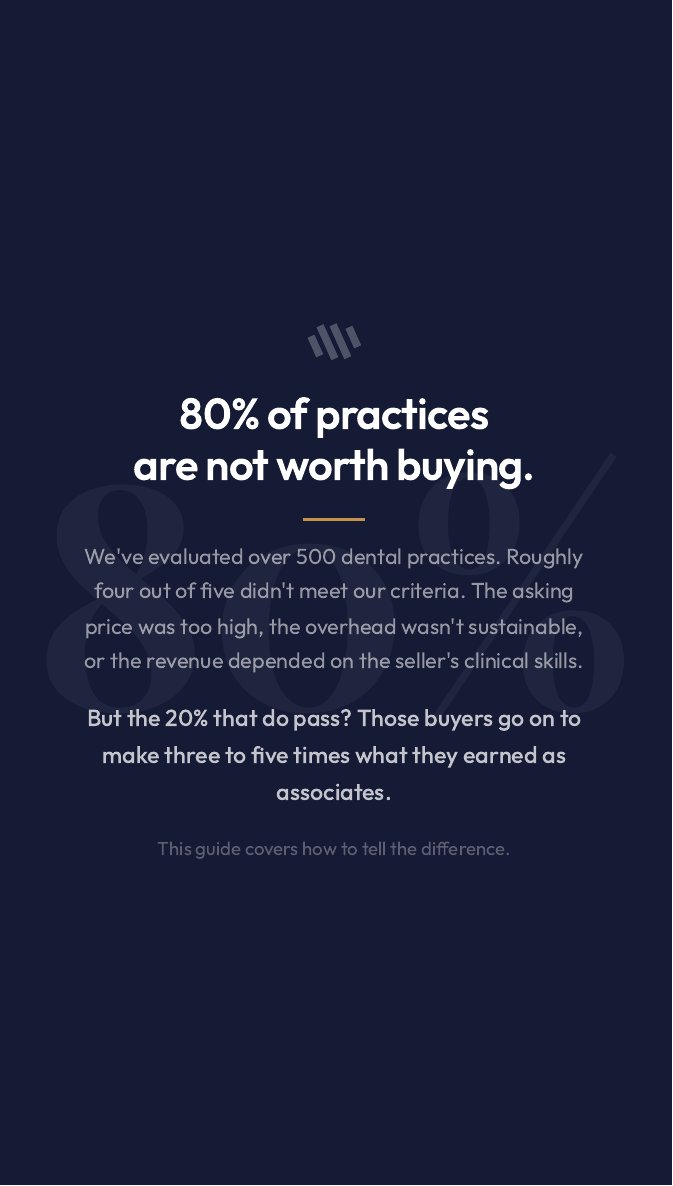
Newsletter + Free Practice Evaluation Checklist
One useful email per week on buying the right practice, plus an instant download of our free Practice Evaluation Checklist.
One email per week. Checklist delivered instantly. Unsubscribe anytime.