

Should you buy a declining dental practice? Learn how to evaluate future revenue potential and identify which practices are genuinely struggling vs. those with hidden opportunity.
People ask me this all the time. "Chris, the practice is down, but the price is cheap. Is that a good deal?" The answer depends entirely on one question: what will revenue look like after you own it?
This isn't a rhetorical exercise. I've evaluated over 500 practices, and I've learned that the word "failing" doesn't actually tell you much. A practice can be declining for completely different reasons that change everything about whether you should buy it.
The Real Question Isn't the Past. It's the Future.
Let me give you two examples from real situations I've worked through.
Practice A was growing like crazy. Revenue went from $500,000 to over $1 million in three years. The dentist was a clinician and a promoter, heavily involved in marketing, bringing in new patients constantly. But here's the problem: his entire growth was dependent on him. The minute he sold, there was a real risk that much of that momentum would stall. The patient base was new. The relationships were with him personally. That growth looked impressive on paper, but it was scary to buy because it might evaporate.
Practice B was declining. Revenue had dropped from $800,000 to $650,000 over two years. The owner was burned out, working fewer days, checking out mentally. But when we dug into the numbers, the patient base was rock solid. Hygiene production was stable. The recall rate was good. What happened? The dentist simply disengaged. He wasn't marketing. He wasn't taking new patients. He was treating the core patient base minimally because he was mentally checked out.
If I buy Practice B, I bring energy back. I get the dentist (now me) actually working full schedules. I re-engage the hygiene program. I don't lose patients, I add them back into the schedule. That "failing" practice is actually an opportunity.
It Matters Why It's Failing
The reason a practice is declining changes everything. There are two main categories:
Seller-dependent problems: The dentist is burned out, dealing with personal issues (divorce, health problems, family situation), disengaged, or just didn't want to run a business. He had the patient base but didn't show up for it. These are often great buys because the business fundamentals are still there. You're buying patients and revenue capacity, not a broken operation.
Market or location problems: The neighborhood changed. Competitor moved in. Insurance mix shifted. The location itself became problematic. These are riskier because the problem doesn't go away when the seller leaves. If you own the same building in the same neighborhood, those headwinds are still there.
Figure out which category you're in. Talk to staff, look at production trends by provider, check the patient base composition, understand the neighborhood. If it's a seller problem, declining practices can be steals.
Look at the Patient Base, Not the Numbers
Here's my framework for evaluating a practice that's struggling:
Is hygiene stable? If yes, you have a foundation. Hygiene is a core indicator of patient loyalty. Stable hygiene with declining overall revenue means the dentist's restorative work dropped, not the patient base.
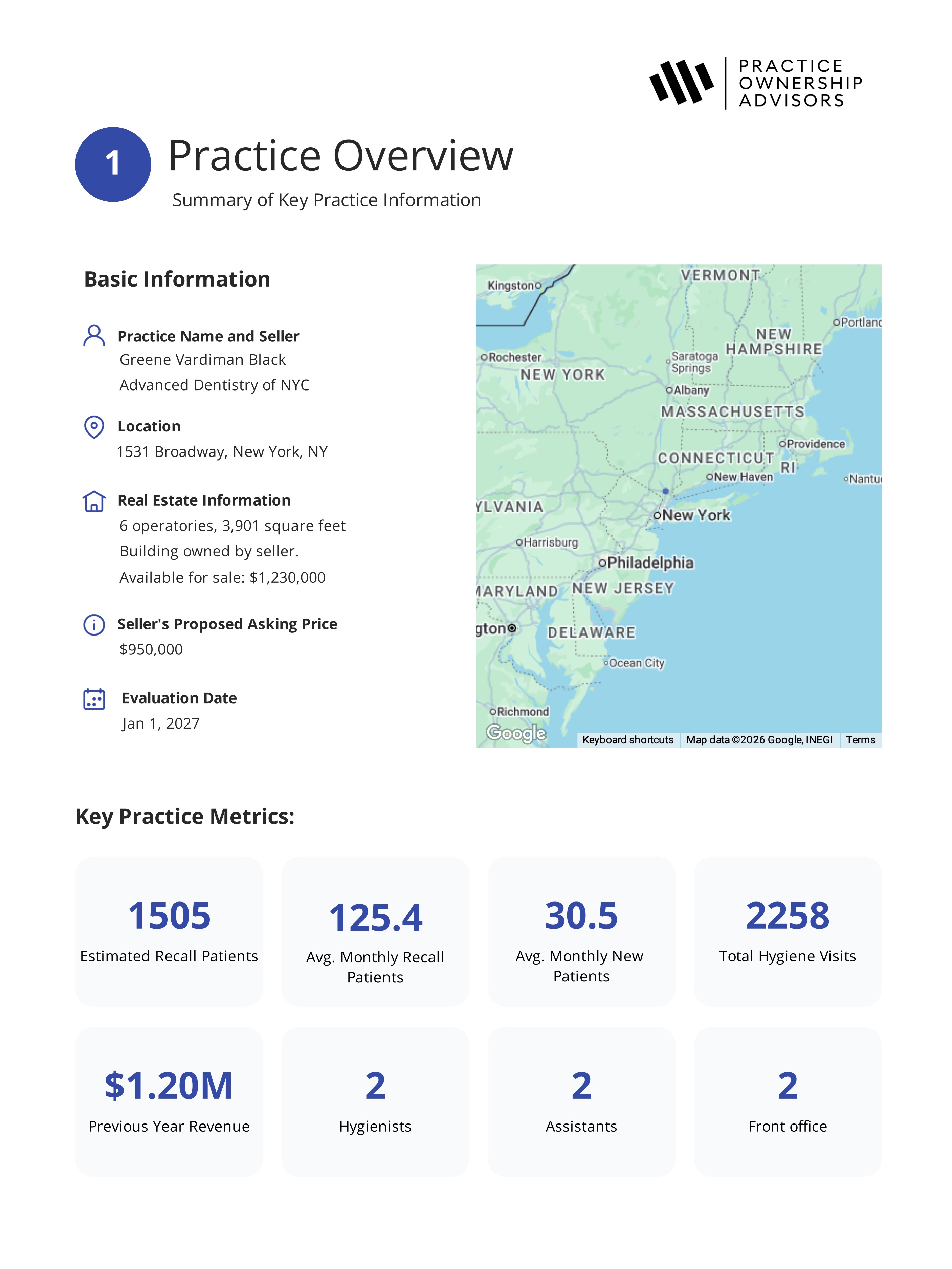
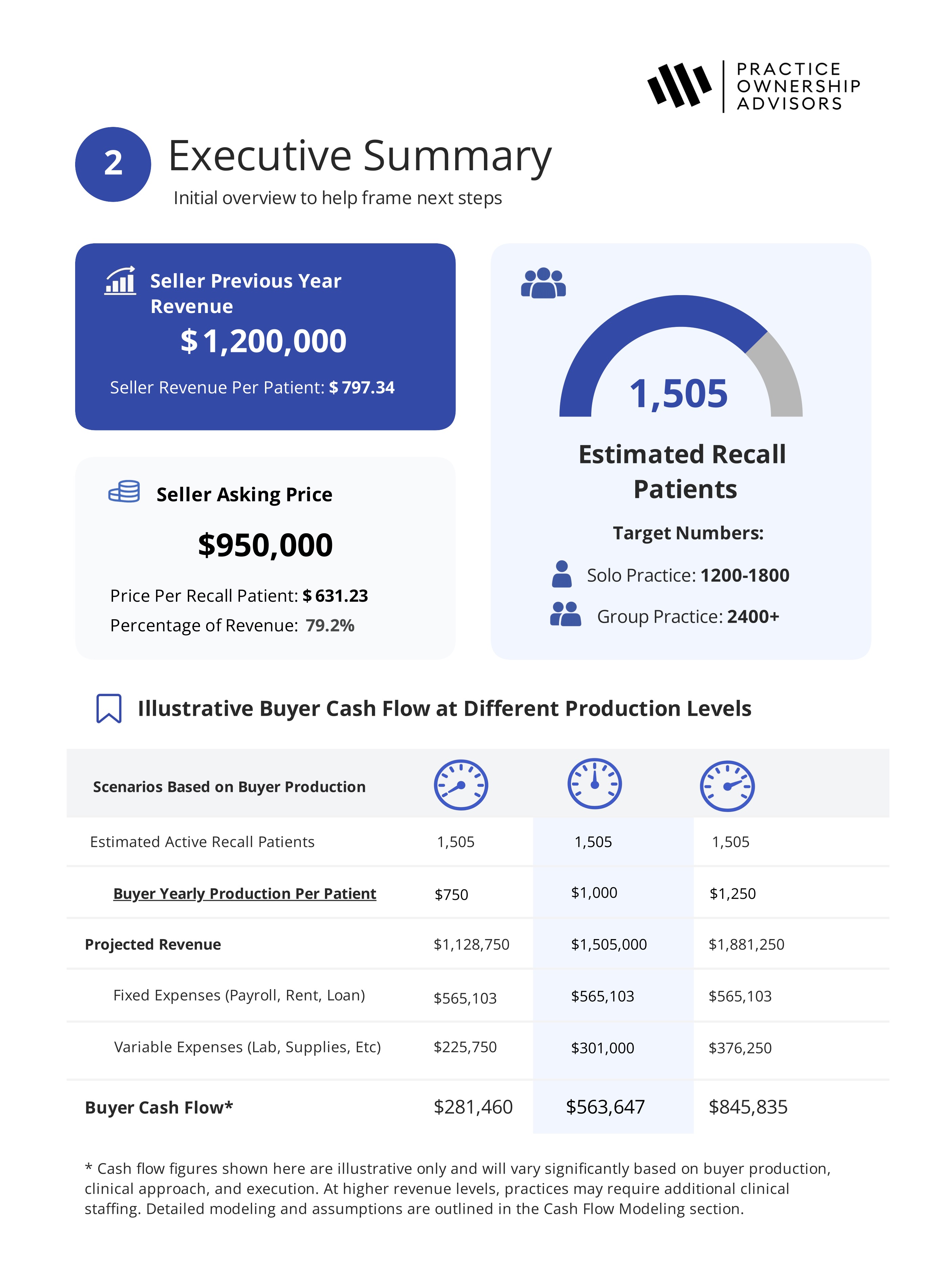
What's the active recall ratio? A practice with 1,200 active recall patients is valuable even if current production is down. Those patients exist. They're in the system. They trust the practice.
Is the decline gradual or sudden? Gradual decline often means a slow burnout, which is fixable. Sudden decline might indicate a specific market shift or a compliance issue.
Walk the book. Look at production by patient. Are there 200 high-value patients who represent 40% of revenue? That's concentration risk, but it's also an opportunity to fill the schedule with similar patients. Are there many small-production patients? That's a bigger patient base with less revenue, which means growth potential.
The Numbers That Matter
When I evaluate a struggling practice, I'm looking for:
- Hygiene production of at least 30% of revenue
- Active recall ratio above 60%
- Fixed overhead below 60% of revenue
- A patient base where the average patient produces $700-$900 annually
If a practice hits those benchmarks, decline is often reversible. If it's sitting at 50% hygiene production, 30% active recall, and 75% overhead, that's a different story.
The Real Risk
The actual risk of buying a declining practice isn't usually that it stays declined. It's that the decline indicates something systemic you didn't see coming. Maybe the neighborhood is going downhill. Maybe the insurance mix is genuinely changing. Maybe the location has foot traffic problems that impact new patient flow.
If you're buying for $400,000 because the practice is declining to $700,000 in revenue, you need to believe you can get it back to $900,000 or higher. If you believe it'll stay at $700,000 or go lower, the price isn't cheap enough.
One More Thing
Talk to the staff. Long-term staff members can tell you immediately whether the decline is a seller problem or a structural problem. They'll tell you whether the patients still show up, whether insurance has changed, whether the location is losing traffic. They live in that practice every day. Their perspective is gold.
A "failing" dental practice is often just a practice that's failing in the hands of its current owner. That's actually the best kind to buy. You fix the operator, you fix the practice. Everything else that looks broken might just be a symptom of an owner who gave up.

Practice Evaluation & Advisory Service
Independent clinical and financial analysis to help you make an informed decision before you buy.
Learn more
Newsletter + Free Practice Evaluation Checklist
One useful email per week on buying the right practice, plus an instant download of our free Practice Evaluation Checklist.
One email per week. Checklist delivered instantly. Unsubscribe anytime.