


The complete due diligence process for evaluating a dental practice. Four pillars: financial, operational, legal, and facility assessment.
Due diligence sounds like boring legal talk. It's not. It's the phase where you confirm that what someone told you on paper actually exists in real life.
I tell my clients that due diligence has one goal: verification, not discovery. You're not trying to uncover hidden problems nobody mentioned. You're confirming the representation matches reality.
There are four pillars to get through.
Pillar 1: Financial
Start with the numbers. You're looking at profit and loss statements, tax returns, accounts receivable reports, and production reports.
P&L statements and tax returns. Compare them side by side. Do they match? If they don't, that's a problem. Some practices keep two sets of books. Some owners inflate P&Ls and understate tax returns. Either way, you want to know.
Pull statements for the last three years minimum. One year can be an anomaly. Three years shows you the trend.
Accounts receivable aging report. This tells you how much money is owed and how long it's been owed. High receivables are a red flag. It means either the practice has cash flow problems or billing processes are broken. Either one is bad.
Production reports. How much does each doctor produce? Which procedures generate the most revenue? Is production concentrated with the seller or spread across the team? Concentration with the seller is a risk factor.
Insurance reimbursement rates. What's the payor mix? Are there a few insurers driving most revenue? Are reimbursement rates depressed in this market? This affects your margins going forward.
Pillar 2: Operational
Financial numbers tell one story. Reality tells another. You need to visit the practice and observe.
Patient demographics. Look at the patient data. What's the age distribution? What's the geographic spread? How far are patients driving to get there? This gives you a sense of the patient base you're inheriting and whether it's sustainable.
Staffing structure. How many hygienists? How many assistants? Is turnover high or stable? Talk to the staff. Are they engaged or are they there for a paycheck? Culture shows up immediately.
Workflow and efficiency. How long do patients wait before being roomed? Are operatories cleaned between patients or does the schedule back up? How long are appointments? Are there dead time gaps? You can spot inefficiency visually.
New patient flow. How many new patients does the practice acquire each month? What's the source? Are they going to a website or calling because they're referred? This tells you how sticky growth is.
Schedule utilization. Look at the calendar. Are the doctors booked solid? Are there gaps? Does the schedule fill up automatically from the waiting list or does the front desk struggle to fill slots? Full schedules mean good reputation or good scheduling. Empty slots mean problems.
Pillar 3: Legal
This is where your attorney comes in, but here's what you're checking.
Contracts. Employment agreements, lease agreement, service contracts, lab contracts. Are they favorable? Do they transfer to you or do they terminate on sale? Are there non-competes that impact you?
Compliance and licensing. Is the practice in good standing with the state board? Are there complaints or disciplinary actions against the dentist? Are all licenses current?
Litigation history. Has the owner been sued? For malpractice? For employment issues? This shows up in litigation search.
DEA and controlled substance licenses. Are they clean? No red flags with the DEA? This matters a lot because you're inheriting these relationships.
Pillar 4: Facility and Equipment
You need to spend time in the practice. A walkthrough with a checklist.
Exterior and location. Visibility from the street. Parking. Is the neighborhood thriving or declining? Accessibility?
Waiting room. Is it clean? Is it comfortable? Does it feel upscale or worn out? First impressions matter because they impact patient perception and case acceptance.
Operatories. How many? What condition? Is the equipment modern or aging? Can you upgrade it or is it built into the buildout? Do you need to invest significantly in equipment replacement?
Sterilization. This is critical. Look at the autoclave. When was it last serviced? Is the sterilization process documented? Are instruments handled properly? Bad sterilization is a compliance risk and a liability risk.
Technology and digital systems. What PMS are they using? When was it last updated? Is there digital imaging? Digital radiography or old-school? How backed up is patient data? Technology transfer is expensive if you need to replace everything.
Scheduling and patient communication. How does the practice manage reminders? Is it manual or automated? Can you integrate your own systems or start from scratch?
Chart review. Pull 10 to 15 random patient charts. Are they complete? Is the documentation good? Do the notes match the charts? Are there treatment plans documented? This tells you about the quality of clinical practice.
Supplies and consumables. What inventory is included in the sale? What do you need to buy separately? Some practices have stockpiles of supplies from bulk buying. Some run lean.
Using These Findings
The point of due diligence isn't to create a checklist and lock it away. It's to inform your offer.
Did you find that receivables are bloated? You might ask the seller to collect them before closing or reduce the price by the amount you think is uncollectible. Staffing is weak? You might ask the seller to stay on for three months post-closing to help with transition. Equipment is aging? That factors into your valuation.
Due diligence is also your last chance to walk away. If you discover something during this phase that changes the economics significantly, you can exit the deal.
Most of the time, though, due diligence just confirms what you already suspected from the initial evaluation. It's reassurance. It's verification. It's the work that keeps you safe.
Don't skip it and don't rush it. This is the phase that stops you from buying a lemon.
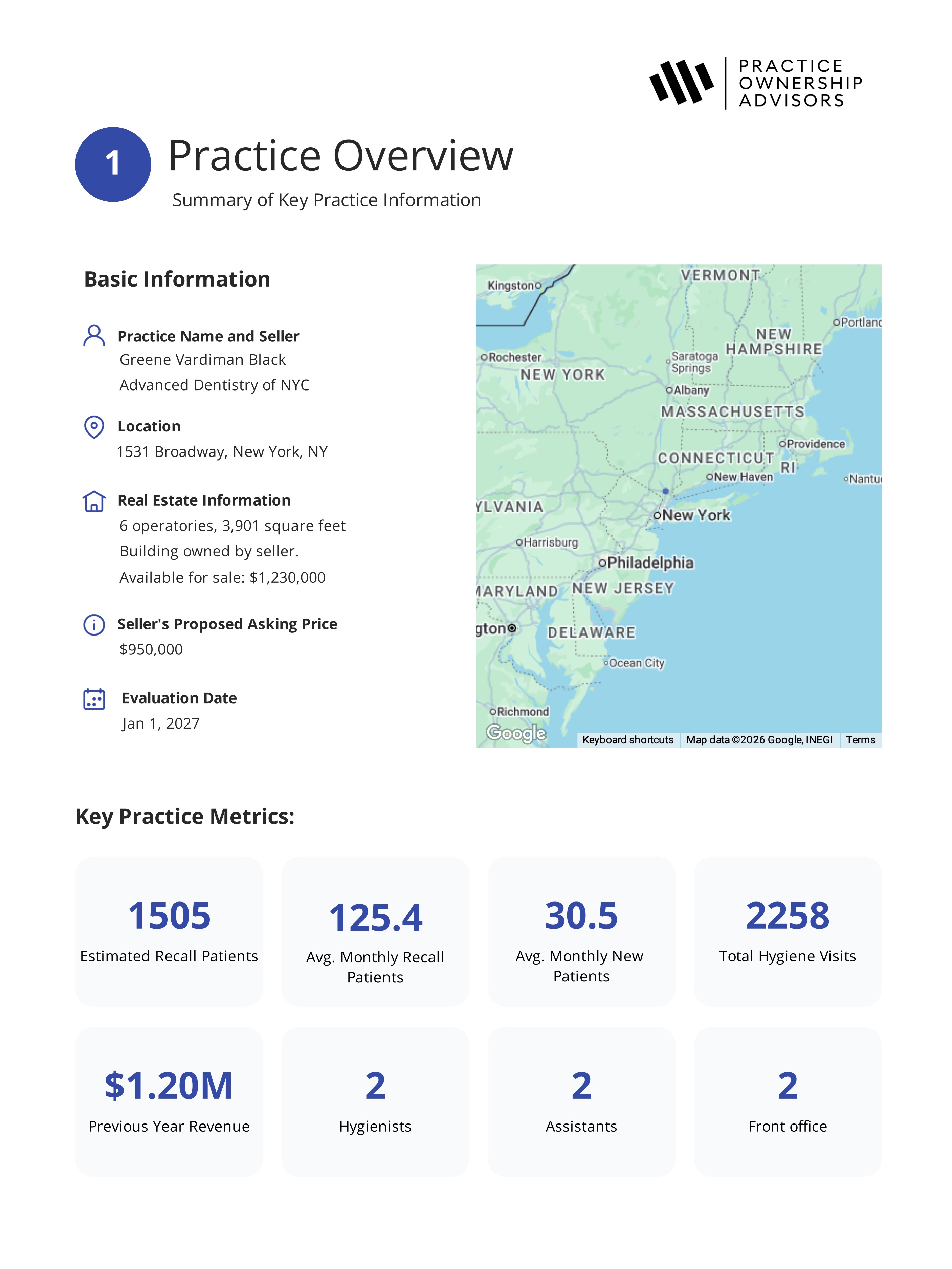
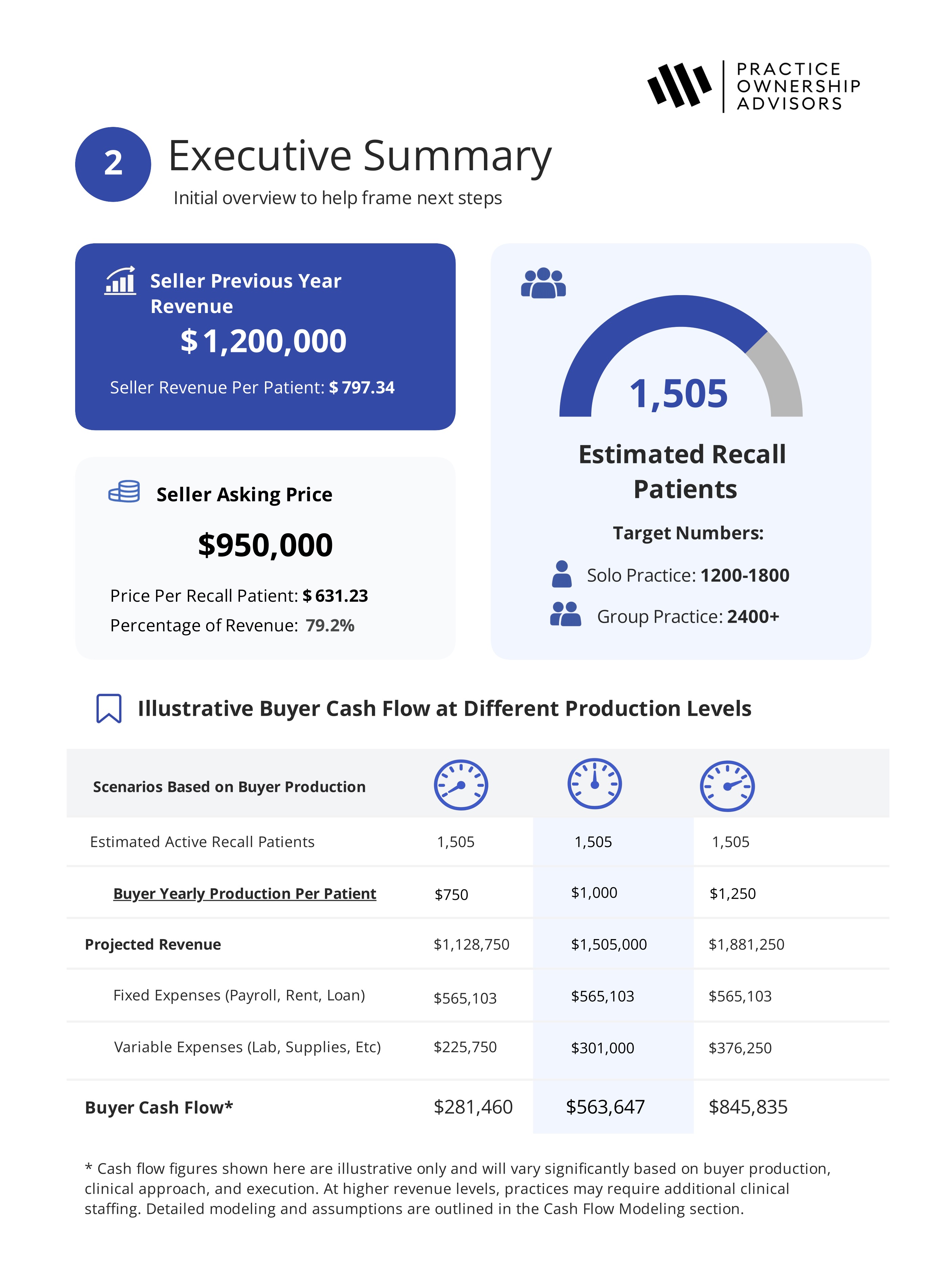
Practice Evaluation & Advisory Service
Independent clinical and financial analysis to help you make an informed decision before you buy.
Learn more
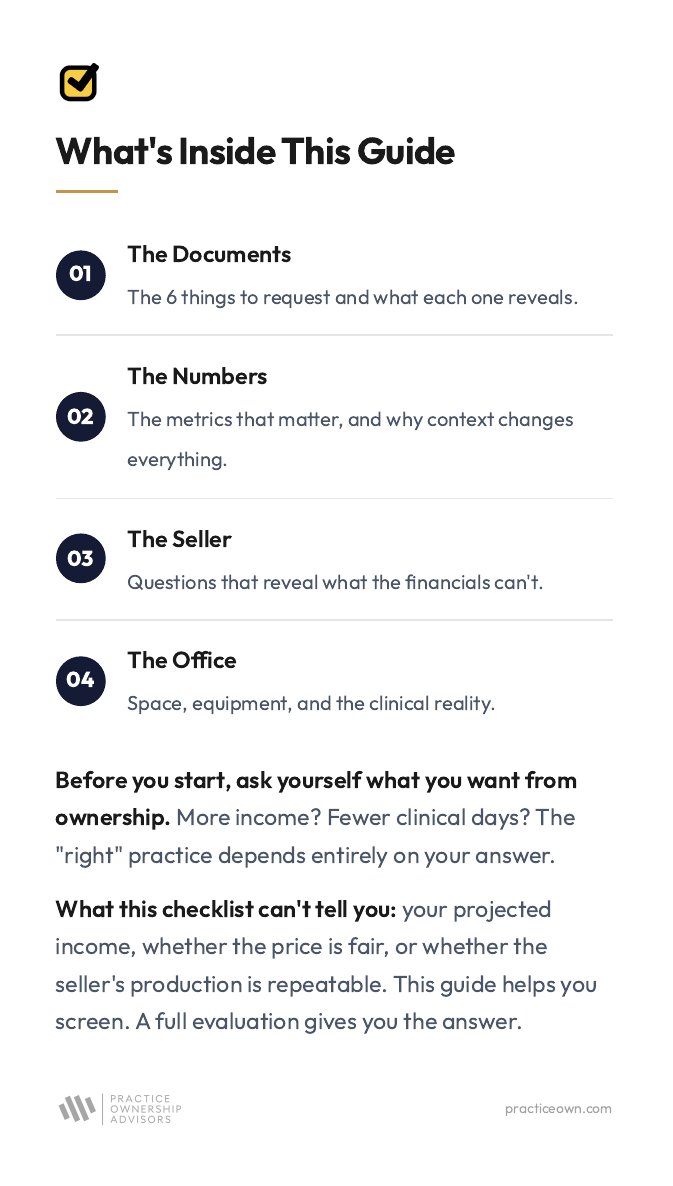

Newsletter + Free Practice Evaluation Checklist
One useful email per week on buying the right practice, plus an instant download of our free Practice Evaluation Checklist.
One email per week. Checklist delivered instantly. Unsubscribe anytime.